Sound Healing in Dubai: The Complete Guide
Sound healing is a guided meditation in which gongs and crystal singing bowls carry you into deep rest. In Dubai, it has become a much-loved wellness ritual.
What is sound healing?
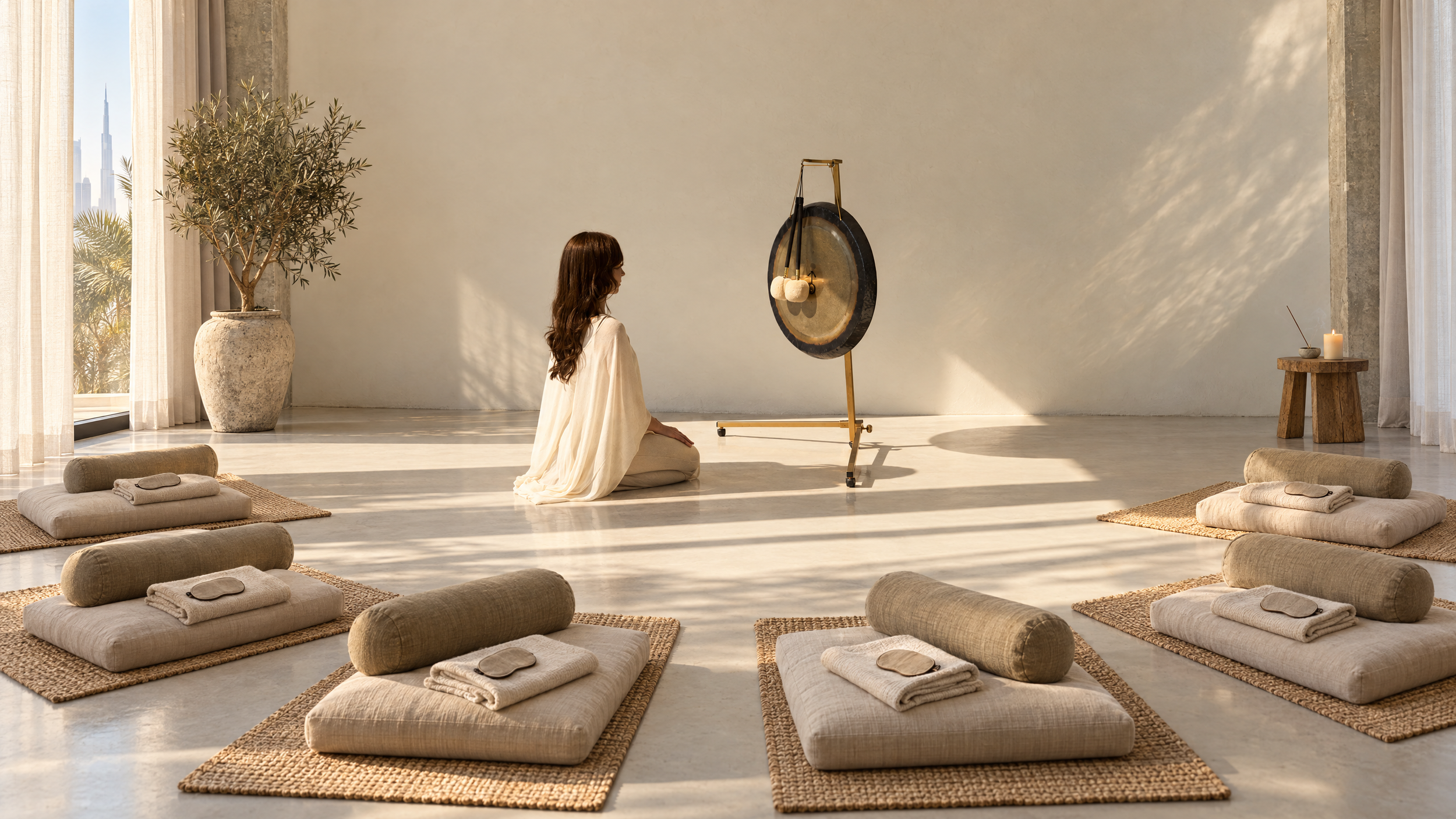
Sound healing is a practice that uses sound and vibration to support relaxation and wellbeing. In a typical session, a facilitator plays instruments around a group lying on mats. The tones are long, layered, and unhurried, giving the mind something to rest on.
That’s why sound healing has caught on so quickly in a city like Dubai. Many people try silent meditation and find their thoughts racing. Sound changes the task: instead of trying to empty your mind, you follow the sound, and the mind settles on its own.
It’s important to be clear about what sound healing is not. It isn’t a medical treatment, and it doesn’t replace care from a doctor or therapist. The word “healing” describes the intention behind the practice: rest, release and a return to balance.
Sound healing, sound bath, gong bath and sound meditation
You’ll see these names on Dubai studio schedules, often used interchangeably.
Sound healing and sound bath describe the same experience, simply called by different names: you lie still and are “bathed” in sound from several instruments, for relaxation and wellbeing.
A gong bath is a sound bath led mainly by gongs, with a rich, layered sound that fills the room.
Sound meditation uses sound as the focus of a meditation, sometimes practiced seated.
If you’re booking for the first time, the name matters less than the instruments, the length of the session and the experience of the person leading it.
Why sound healing is growing in Dubai
The pace. Long working hours, constant connectivity and a culture of high performance make true rest precious. Sound healing offers an hour where nothing is asked of you.
The accessibility. It requires no fitness, flexibility or prior experience. It welcomes a CEO, a new parent and a first-time meditator in the same room.
The setting. Dubai’s hotels, rooftops and wellness studios have embraced it as a signature experience, and companies increasingly include it in off-sites and wellness days.
The climate. For much of the year, a cool, quiet indoor experience is exactly what people want, while the winter months open up sunrise, sunset and beach sessions.
The instruments used in sound healing
Each instrument produces a different quality of sound, and a skilled facilitator deliberately layers them.
Gongs
Gongs have been played across Asia for more than two thousand years, in ceremonies, celebrations and sacred rites. Cast or hammered from bronze, a gong builds slowly into a rich, swelling wash of overtones that fills the whole room and is felt in the body as much as it is heard.
Crystal singing bowls
A modern addition to sound healing, first made in the 1980s from quartz sand fused at extreme heat into a seamless bowl. Each bowl is tuned to a single note and gives a remarkably pure, clear tone. People often describe it washing over them like a gentle wave, leaving them feeling balanced and at peace.
Tibetan singing bowls
Also known as Himalayan singing bowls, these hand-hammered bowls are traditionally made in the Himalayan region from bell metal, a bronze alloy of copper and tin. Struck or circled with a mallet, each bowl releases a warm, layered tone rich in overtones, and its vibration can be felt as well as heard.
Chimes, ocean drums and shakers
These instruments recreate the sounds of nature: the movement of waves, rain, a soft breeze. Their soothing sounds help the body relax and bring a sense of being outdoors into the room.
At Resonance, sessions are built around the gong and crystal bowls, combined with Kundalini breath and mantra.
What happens in a Resonance sound healing session?
Resonance sessions last 60 to 90 minutes and follow a clear arc, designed to take you from a busy mind to deep rest.
Arrival. You settle onto a mat with cushions, a blanket and an eye pillow. Get as comfortable as you can, because you’ll be lying still for a while.
Kundalini activation. A few minutes of guided breath and movement from Kundalini practice bring your attention out of your head and into your body, so the sound has somewhere to land.
The sound journey. You lie down and close your eyes. The crystal bowls and gong begin softly and build in layers. This is the longest part of the session.
Deep rest. As the sound softens, many people drift into a state between waking and sleep. Some fall asleep entirely, which is completely normal.
Closing meditation. A short Kundalini meditation with breath and mantra gently brings you back, so the calm stays with you.
There’s nothing to perform and nothing to get right. If your mind wanders, you simply come back to the sound.
How does sound healing feel?
Everyone’s experience is different, and the same person can have different sessions on different days. The most commonly reported experiences are:
A deeply relaxed, grounded body
Losing track of time, often with an hour feeling like minutes
A quieter mind, with the mental to-do list fading into the background
Tingling or a sense of vibration moving through the body
Moments of emotion, memories, or a feeling of release
Feeling calm and clear, or pleasantly sleepy, afterward
If emotion comes up, that’s a natural part of the experience. A good facilitator creates a space where it’s safe to let it pass.
What are the benefits of sound healing?
Sound healing works on the body and mind. The benefits people most often report, many of them supported by research, include:
Nervous system regulation. Slow, sustained tones help the body shift out of high alert and into deep rest.
Lower stress and tension. Studies report reduced tension, anxiety, and fatigue after sound meditation.
A lighter mood. Many people leave feeling calmer, more positive, and emotionally lighter.
Better sleep. The deep rest of a session helps many people fall asleep more easily and sleep more soundly.
Mental clarity. With a quieter mind, people often return with more cognitive bandwidth, clearer thinking and better decisions.
Resilience. Regular sessions build the capacity to stay calm under pressure, supporting sustainable high performance.
Wellbeing and connection. Research has also found a greater sense of overall and spiritual wellbeing after sound meditation.
Who can benefit from sound healing?
Anyone and everyone can benefit from sound healing. There’s nothing to learn or perform, so it welcomes people of all ages, backgrounds, and experience levels.
Parents. Stay-at-home mums, new mothers and working parents gain an hour that is entirely their own and often leave feeling lighter and calmer.
Professionals. Entrepreneurs, founders and executives find space to switch off, and return with clearer thinking.
Athletes and creatives. Active people use it for deep recovery, while artists, writers and musicians find it sparks new ideas.
Anyone seeking calm. Students, new arrivals in Dubai, older adults and anyone going through change find grounding, calm and deeper sleep.
Meditators. Beginners have the sound to guide them, and experienced practitioners deepen their practice.
Groups. Couples, friends, families, teams and hotel guests share a restorative experience together.
Who should check with a doctor first?
Sound healing is gentle and suits most people. Speak to your doctor before attending, and tell your facilitator beforehand, if you:
Are pregnant, as the effects of strong sound vibration, especially from gongs, haven’t been studied in pregnancy
Have epilepsy or a history of seizures
Have a pacemaker, cochlear implant or other implanted medical device
Have a serious mental health condition, or are in active trauma recovery
Have tinnitus or sensitivity to loud sound
A responsible practitioner will ask about this before the session and adapt it where needed.
What does the research say about sound healing?
Research into sound meditation is growing, and the findings are encouraging.
A study of 62 adults found that a single singing-bowl meditation significantly reduced tension, anger, fatigue, and low mood.
A controlled trial of 100 adults found that four weeks of sound meditation with gongs, singing bowls and bells reduced anxiety, low mood, blood pressure and the stress hormone cortisol, more than music alone.
Together, they point to what people often feel after a session: lower tension, a lighter mood and a calmer body.
Types of sound healing sessions in Dubai
Sound healing in Dubai comes in several formats, and the right one depends on what you’re looking for.
Group studio classes. A drop-in session at a wellness studio, usually 60 to 75 minutes, and a lovely way to try sound healing for the first time.
Private sessions. A session designed for you, your partner or your family, in your home or a private space.
Corporate sessions. Brought to your office, hotel or venue and sized to your group, for off-sites, wellness days and leadership teams.
Hotel and retreat programs. Regular or seasonal sessions offered as part of a guest experience.
Specialty formats. Floating sound baths in pools, and sunrise, sunset or beach sessions in the cooler months.
Resonance brings sessions to you: to wellness studios across Dubai and Abu Dhabi, to corporate teams, and to hotels, retreats and private groups.
How to prepare for your first session
Wear loose, comfortable clothing and bring a layer, as the body cools as it relaxes.
Eat lightly beforehand.
Arrive a few minutes early so you can settle in calmly.
Mention any health conditions to the facilitator before you begin.
Come with an open mind. There is no right way to experience it.
Afterward, drink water, give yourself a few quiet minutes before driving or checking your phone, and notice how you feel over the rest of the day.
Making sound healing part of your routine
A single session can feel like a reset. Regular sessions tend to build on each other: many people find it gets easier to drop into deep rest each time, and that the calm starts to carry into everyday life.
A few ways people in Dubai fit it into their lives:
A monthly reset. One session a month, often at the end of a busy week.
A weekly ritual. A regular class at a favorite studio, kept as a standing commitment to yourself.
Around big moments. Before a launch, after a demanding quarter, or at the start of a holiday to help you switch off.
With your team. A quarterly session as part of a wellness programme, so rest becomes part of the culture.
Between sessions, simple habits keep the effect going: a few minutes of slow breathing, listening to recorded sound meditations, or ten screen-free minutes before bed.
Sound healing with Resonance
Resonance combines gong and crystal bowl sound healing with Kundalini breath, mantra, and meditation.
Each session opens with a short activation to bring you into the body, moves into deep rest with the crystal bowls and gong, and closes with a brief meditation so the calm stays with you after you leave.
We bring the full experience to wellness studios, corporate teams, hotels, and private groups across Dubai and Abu Dhabi, and every session is shaped around the people in the room.
Frequently asked questions
Is sound healing safe?
For most people, yes. It’s a gentle, non-invasive practice. If you’re pregnant, have epilepsy, a pacemaker or other implant, or a serious health condition, check with your doctor first and tell your facilitator before the session.
Do I need meditation experience?
No. Sound healing is often easier for beginners than silent meditation, because the sound gives the mind something to follow. You’re guided from beginning to end.
How long is a sound healing session?
Most sessions in Dubai last 60 to 90 minutes. Corporate sessions are often 30 to 45 minutes, to fit into an agenda.
What should I wear to a sound bath?
Comfortable, loose clothing you can lie down in, plus a layer.
Is it normal to fall asleep during sound healing?
Yes. Many people drift between waking and sleep, and some fall fully asleep. You’ll still benefit from the rest.
How often should I do sound healing?
There’s no fixed rule. Some people come once for a reset; others make it a weekly or monthly ritual. Notice how you feel and let that guide you.
What’s the difference between a sound bath and a gong bath?
A sound bath can use any combination of instruments, such as crystal bowls, Tibetan bowls, chimes and gongs. A gong bath is a sound bath led mainly by gongs, whose rich, layered tones fill the room.
Planning a session for your studio, team or hotel in Dubai or Abu Dhabi? Tell us about your space and group, and we’ll get back to you within 24 hours.